Small and medium-sized enterprises (SMEs) are a relative and multi-dimensional concept, which usually refers to economic organizations that do not meet the standards of large enterprises in terms of business scale, number of employees, total assets, and market share. When defining small and medium-sized enterprises (SMEs), different countries and regions typically set criteria based on their respective economic development levels and industry characteristics, combining two categories of indicators. The first consists of quantitative indicators reflecting operational scale, such as number of employees, annual turnover and total assets. The second covers qualitative features representing market position, including independent operation by owners, absence of market dominance, relatively simple management structures, and generally underdeveloped professional functional departments. Based on the combination of these indicators, countries develop differentiated definitional standards. For instance, the European Union and the United Kingdom classify enterprises into medium-sized, small and micro categories by headcount, revenue and total assets. The UK additionally requires enterprises to meet two or more of the classification criteria. The United States sets differentiated standards for small businesses in terms of assets, headcount and average annual revenue according to industry attributes. Japan stipulates caps on capital and regular employees separately for four major sectors: manufacturing, wholesale, services and retail. South Korea takes total assets, industry-specific revenue requirements and substantive operational independence as the core classification criteria. China's current classification standards, jointly issued by the Ministry of Industry and Information Technology and three other government departments, apply to 16 sectors including agriculture, forestry, animal husbandry, fishery, industry and construction. Based on three core indicators — number of employees, operating revenue and total assets — SMEs in China are further divided into medium-sized, small and micro enterprises.
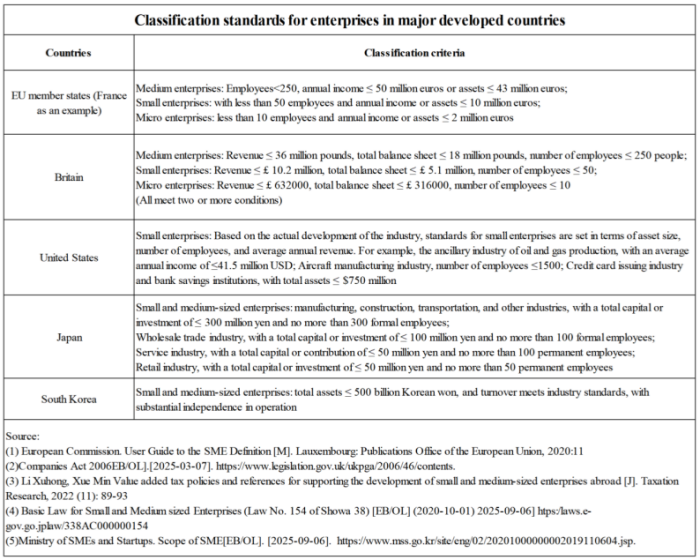
Table1: Classification Standards for SMEs in Some Developed Countries
Although countries adopt varying specific criteria to define small and medium-sized enterprises (SMEs), these enterprises share numerous common structural and functional characteristics, forming a dynamic cornerstone of the modern economic system. First, SMEs feature high flexibility and adaptability. With fewer decision-making tiers and shorter management chains, they can swiftly adjust products and services in response to fluctuating market demands — an agility rarely matched by large corporations. Second, constrained by limited resources, most SMEs focus on niche markets or local communities. They tend to cultivate expertise intensively to build differentiated competitive edges in specific fields. Third, SMEs boast robust innovation vitality. Unlike large enterprises with sophisticated R&D systems, many SMEs are bold in trialling new technologies and business models, and have even become important cradles of disruptive innovation. Of course, SMEs are inherently vulnerable and more sensitive to macroeconomic fluctuations, changes in financing conditions, and supply chain disruptions. Therefore, governments around the world generally prioritize supporting SMEs.
In terms of global value, the contribution of SMEs to the development of the world economy is irreplaceable. According to relevant United Nations research, SMEs are the engine of economic growth and job creation, accounting for 90% of all businesses worldwide, providing 70% of global employment, and contributing 50% of global GDP. According to the World Bank, in emerging economies and developing countries, formal SMEs contribute up to 40 percent of national income (GDP), and this proportion increases significantly when informal SMEs are included. UN Secretary-General António Guterres emphasized the important role that micro, small and medium-sized enterprises play in driving economic growth and empowering women, youth, and marginalized groups in his message on MSME Day 2024. Small and medium-sized enterprises (SMEs) also play a small yet crucial role in the supply chains of large enterprises. Through forms such as parts supply, distribution network extension, and professional service outsourcing, they ensure the health and diversity of the entire industrial ecosystem. In summary, the healthy operation and sustained vitality of SMEs are directly related to the resilience of the global economic recovery, stable employment patterns, and long-term growth potential. In view of this, governments should take serving SMEs as a statutory duty and policy priority, providing solid institutional guarantee and public service support for their healthy development.
From the perspective of SMEs, targeted tax services help them consolidate operational foundations, mitigate tax risks and run businesses with greater peace of mind. On the one hand, most SMEs lack professional tax teams and have limited capacity to understand and navigate complex tax policies and declaration procedures. Misinterpretation of policies and irregular operations may easily trigger tax risks, resulting in fines and damaged business credit. Personalized taxpayer services, through precise guidance and dedicated support, help businesses clarify their tax obligations and standardize their operational procedures, effectively reducing tax risks and allowing them to operate with greater peace of mind. On the other hand, SMEs have a weaker ability to withstand risks and are more sensitive to cost control. Tax costs directly affect their profitability and long-term development. Personalized tax services deliver targeted preferential tax policies and assist with formalities for tax reductions and exemptions. This helps enterprises fully leverage policy benefits, cut tax costs reasonably, optimize cash flow, and secure funding for production expansion, technological R&D and market development. In addition, staff handling tax affairs at SMEs usually hold multiple roles with limited time and energy. By streamlining procedures and service channels, tax authorities cut the time spent on tax-related work, allowing such personnel to focus more on core business operations.
From the perspective of tax authorities, serving small and medium-sized enterprises (SMEs) to enhance their willingness and capacity for compliance, thereby improving the quality and efficiency of tax collection and administration and fostering greater tax law compliance, can lead to a more standardized tax order. On the one hand, SMEs are numerous, geographically scattered, and vary greatly across industries. The traditional "one-size-fits-all" service model is inadequate for meeting their diverse needs, which easily leads to problems such as ineffective policy implementation and low tax collection and administration efficiency. Through personalized taxpayer services, tax authorities can precisely address the needs of enterprises, enhance their understanding of and compliance with tax policies, reduce issues such as underreporting and misreporting caused by information asymmetry, lower collection and management costs, and improve tax administration efficiency. On the other hand, personalized taxpayer service helps the tax authorities cultivate tax sources, stabilize the fundamental tax base, and achieve the sustainable development of the tax system. The traditional tax administration model focuses on post-event supervision and tax collection, which fails to accommodate the growth traits of SMEs. Enterprises may suffer setbacks due to tax burdens and policy gaps, eventually leading to the loss of tax sources. By providing personalized services for SMEs, tax authorities effectively implement supportive policies including tax cuts and fee reductions, helping these enterprises lower burdens, improve efficiency, operate steadily and grow stronger. From a long-term perspective of tax governance, quality personalized taxpayer services can help SMEs gradually grow into stable, high-quality sources of tax revenue, thereby continuously expanding the existing tax base and unlocking new revenue potential. It not only ensures the steady growth of tax revenue, but also builds a virtuous cycle where "services help enterprises grow, and enterprises, in turn, replenish the tax base," providing sustained support for the high-quality development of the tax economy.
To effectively help SMEs alleviate operational pressures and overcome development bottlenecks, tax authorities in countries and regions around the world have been exploring taxpayer service models suited to the development needs of SMEs, based on their public service mandate. All parties have continuously improved service measures and optimized service provision, gradually establishing a comprehensive taxpayer service system covering the entire life cycle of SMEs. By leveraging multiple approaches such as process simplification, policy-driven burden reduction, and risk prevention and control, they have empowered and safeguarded the healthy development of SMEs.
Early taxpayer service for SMEs was centered on ensuring that enterprises could smoothly fulfill their tax obligations, focusing on addressing the problems of complex tax procedures and high compliance costs. At this stage, tax authorities mainly focus on simplifying basic tax procedures. They streamline tax registration formalities and adopt a one-stop service model with parallel processing by multiple back-office departments to shorten processing time. Tax declaration procedures are also optimized by consolidating various forms, simplifying filing requirements and cutting redundant document submissions. Dedicated service windows are set up to provide in-person consultation and guidance for SMEs, addressing basic inquiries about tax registration, declaration and tax payment procedures.
Services at this stage focus on helping SMEs get started with tax matters effortlessly. They enable enterprises to complete basic procedures such as tax registration and tax declaration quickly and conveniently, preventing disruptions to regular business operations caused by cumbersome formalities and facilitating their integration into the formal economic system.
With the rapid development of information technology, especially the widespread use of the Internet, tax services for SMEs have entered an era of digital transformation. Its core goal is to break time and geographical constraints and make tax handling more convenient. The key measures taken by the tax authorities include: establishing an electronic tax platform to enable the "full online processing" of high-frequency matters such as tax registration, tax filing, tax payment, and invoice collection; promoting self-service terminals by deploying equipment at locations such as in-person taxpayer service centers and bank branches to provide 24-hour self-service; and opening online information channels, allowing businesses to access tax policies, service reminders, and other information at any time.
Information services have significantly reduced the tax compliance costs for SMEs, decreased the number of trips their staff make to in-person taxpayer service locations, saved time, improved tax efficiency, conserved substantial human and material resources for businesses, and promoted the shift in Overall Taxpayer Service from being "primarily offline" to "online and offline integration."
With the widespread application of technologies such as big data and artificial intelligence, and as countries and regions place increasing emphasis on the development of SMEs, taxpayer service has entered a stage of refined and personalized development. The tax authorities are no longer confined to a "one-size-fits-all" service model. Instead, they create accurate profiles based on information such as a company's industry characteristics, business scale, and tax behavior, thereby providing differentiated services. The main measures include: establishing a targeted taxpayer policy delivery mechanism for preferential tax policies, identifying eligible enterprises through big data analysis, and proactively delivering policy information and handling guidelines; setting up dedicated service channels and professional teams for SMEs to provide one-on-one enquiry and guidance; implementing tax risk early warning services, identifying potential risks through data analytics, and providing advance reminders and corrective guidance; and developing tailored tax payment guidelines based on the characteristics of different industries to help enterprises accurately apply relevant policies. These measures have accurately and effectively addressed issues such as the untimely access to policies, insufficient understanding, and inadequate application by small and medium-sized enterprises (SMEs). They meet the personalized needs of SMEs, further optimize the taxpaying experience, and enhance the sense of fulfillment for businesses.
Singapore Implements Multiple Measures to Support Steady Development of SMEs
1. Establish a Dedicated Service Organization
The Inland Revenue Authority of Singapore (IRAS) established the Small Business Division in 2022, which is dedicated to serve small business taxpayers as part of concerted efforts to support SMEs as they navigate their business in an increasingly complex operating environment. IRAS supports SMEs through various tax simplification and digitalisation measures to reduce their tax compliance burden, allowing them to focus on core business activities and growth.
2. Simplified Filing Requirements
2.1 Estimated Chargeable Income (ECI) Filing Waiver
Companies must file their ECI, which is an estimate of taxable profits after deducting allowable expenses, within three months from the end of their financial year. This is in addition to the requirement to file annual tax returns by 30 November each year. To simplify compliance, companies with annual revenue of S$5 million or below for the financial year and zero ECI for the Year of Assessment are exempted from filing ECI.
2.2 Tax Return Form Simplification
IRAS has progressively simplified tax return forms over the years, offering different options based on company size. For companies with annual revenue of S$5 million or below, they may be eligible to file a simplified corporate income tax return which reduces complexity from 7 pages to 18 fields, with no need to submit financial statements and tax computations. For companies with annual revenue of S$200,000 or below, this is further streamlined to just 6 essential fields.
3. Promote Digital Solutions
By implementing seamless filing from software (#SFFS), companies can choose from a list of software which automates and streamlines tax and other regulatory submissions across multiple government agencies through API integration into businesses’ natural systems. For example, through the One-Stop Payroll initiative, businesses can now submit payroll and employment-related data to IRAS, Central Provident Fund Board and Ministry of Manpower simultaneously via their existing payroll software, eliminating the need for separate submissions to different agencies.
To provide accurate taxpayer service, it is first necessary to clarify the standards for SMEs. Clearly defining the scope of SMEs enables tax authorities to scientifically allocate service resources and develop targeted service measures based on differences in business scale. Clear definition standards can also help SMEs accurately determine their own qualifications and clearly understand the applicable tax policies, tax incentives, and convenient tax channels. Specifically, the following two points must be addressed.
When setting standards for SMEs, there is no need to pursue comprehensive coverage across multiple indicators. Based on the characteristics of the country's (or region's) industrial structure, core dimensions such as number of employees, operating revenue, and total assets can be selected. On this basis, differentiated indicators may be appropriately incorporated. The construction of the indicator system should focus on the following aspects: first, the selection of core indicators must be aligned with the industrial structure. For economies dominated by the service and light industries, where the scale of human resources directly reflects operational scale and financial capacity, "number of employees" can be prioritized as the core indicator. For countries dominated by capital-intensive industries such as machinery manufacturing, energy, and electronic communications equipment manufacturing, "total assets" combined with "operating income" can be selected as the core indicator, aligning with industrial characteristics of high labor productivity, low labor consumption, and a high correlation between output and capital input. Emerging market countries may emphasize the "operating income" indicator to suit the practical circumstances of their relatively lower level of corporate financial accounting and the difficulty of asset statistics. Second, the setting of indicator thresholds must be adapted to the stage of economic development. Developed countries may set relatively lenient thresholds to cover more SMEs requiring services; developing countries could adopt tiered thresholds, ensuring the core needs of small enterprises are met while preventing medium-sized enterprises from overusing resources. Third, refine differentiated adaptation rules for different industries. Business models, capital requirements, and financial characteristics vary significantly across different industries, making it difficult for a single standard to meet the taxpayer service needs of all sectors. Therefore, on the basis of core indicators, further industry-specific adjustments are necessary. For basic industries such as agriculture and fisheries, more relaxed standards can be established to accommodate their characteristics of low scale and weak risk resistance. For emerging industries such as the digital economy and cross-border trade, industry-specific indicators—such as the proportion of cross-border transaction volume and online revenue—can be added to ensure taxpayer service adapts to the new forms of industry development. For example, in sectors such as infrastructure, natural resources, agriculture, timber, telecommunications and emerging information and communications technologies, tourism, and ecotourism, Gabon has established that enterprises in the investment or construction phase may enjoy tax benefits for up to three years if specific conditions are met.
The environment for the survival and development of SMEs constantly changes with economic cycles, industrial upgrading, and policy adjustments. If the measurement standards remain unchanged for a long time, they will gradually become detached from reality, leading to a disconnect between taxpayer service and the needs of enterprises. Therefore, it is essential to establish a regular dynamic adjustment mechanism. First, define the adjustment cycle. In line with the pace of economic development, a regular evaluation cycle can be established. This cycle would involve re-evaluation based on criteria such as the precision of standard coverage, the appropriateness of indicator thresholds for the current economic level, and the alignment of industry classifications with structural changes in the industrial sector. This approach helps avoid adjustments that are either too frequent or too delayed. Second, establish the basis for adjustment. Based on objective indicators such as domestic GDP growth rate, inflation rate, industrial structure proportion, and enterprise development data, we ensure the scientific basis of the adjustment. Third, standardize the adjustment process. Incorporate adjustments into the framework of legalization or institutionalization, and clarify adjustment procedures through government documents and departmental regulations to ensure the authority and stability of standards.
Legal Basis and Classification Details for Hungarian SME Classification Standards
The definition and classification of SMEs in Hungary have a clear legal basis, with the specific standards as follows:
1. Core Definition Basis
Hungary uses Article 3 of the 2004 Law No. 34 on Small and Medium-sized Enterprises and the Promotion of Their Development as the core basis for defining SMEs. This definition was formulated with reference to European Commission Recommendation 2003/361/EC and has been incorporated into the national legal system. At the same time, Article 4, Paragraph 24 of the Corporate Tax and Dividend Tax Act No. LXXXI of 1996 cites the aforementioned definition and elaborates on it, bringing eligible law firms, bailiff's offices, patent agencies, notary offices, and the like within the scope of application for SMEs, while also specifying that micro-enterprises are a sub-category of SMEs.
2. Specific Classification Criteria
SMEs must meet two conditions simultaneously: they must have fewer than 250 employees, and their annual net turnover must not exceed the Hungarian forint equivalent of 50 million euros, or their total balance sheet must not exceed the Hungarian forint equivalent of 43 million euros.
Small businesses must meet both conditions: they must have fewer than 50 employees, and their annual net turnover or total balance sheet must not exceed the Hungarian forint equivalent of 10 million euros.
Micro-enterprises must meet two conditions simultaneously: fewer than 10 employees; and an annual net turnover or total balance sheet amount not exceeding the Hungarian forint equivalent of 2 million euros.
3. Exclusion Provisions
If the state or local government, directly or indirectly, holds 25% or more of an enterprise's equity in the form of capital or voting rights, that enterprise shall not be classified as a SME. Investors within the scope of special regulations who have an affiliated relationship with a specific enterprise are not subject to the aforementioned restrictions.
4. Legal Application Note
Unless otherwise explicitly provided by law, the above definition standards shall be uniformly applied to the terms "SMEs", "micro, small and medium-sized enterprises", and "small and medium-sized enterprises" as mentioned in various legal documents.
Once the classification criteria are clearly defined and the target service recipients are accurately identified, the key is to ensure that all support measures are effectively implemented and produce tangible results. This section focuses on organizational safeguard, mechanism improvement, policy supply, process streamlining, and policy publicity, introducing specific practices for providing basic taxpayer services to SMEs. It aims to serve as a reference for countries advancing similar initiatives.
To better meet the tax-related needs of SMEs, many countries and regions choose to establish dedicated taxpayer service departments or teams within their tax authorities, forming a systematic and regular service mechanism. Through institutional specialization and professional staffing, tax authorities will coordinate the implementation of tax and fee support policies, precisely address the tax-related needs of enterprises, standardize daily collection and management services, effectively prevent and control tax-related risks, and use professional services to support the healthy growth of small and medium-sized market entities. For example, the Taxpayer Service Department of the Federal Tax Authority of the UAE has established a dedicated SME taxpayer support collaboration unit. It has also launched a special support program for SMEs to provide them with convenient services, making it easier for SMEs to connect with tax specialists, access professional training materials, and benefit from tax incentive policy enquiry services offered by tax agencies.
If conditions do not permit establishing a dedicated organization, you can flexibly form a professional team or a dedicated service window to expand exclusive service channels. For example, establish a professional taxpayer service team for SMEs, incorporating key tax personnel, policy experts, and staff from professional service organizations to provide enterprises with personalized support such as "one-on-one" consultation and on-site services. Alternatively, set up dedicated windows for SMEs in Overall Taxpayer Service centers to enable "one-stop" processing for services like tax registration, tax declaration and payment, and policy enquiry, thereby further enhancing the range of exclusive services for SMEs.
Small and medium-sized enterprises (SMEs), constrained by limited staff and relatively weak financial and tax expertise, often face difficulties in the tax compliance process, such as delayed access to policies updates in a timely manner and inadequate channels for problem resolution. To this end, tax authorities should establish a regular service mechanism covering the pre-filing, in-progress and post-filing stages. By assigning dedicated liaison officers and adopting rapid response mechanisms, tax authorities will consistently offer stable, convenient and efficient taxpayer service to SMEs.
One is to establish a dedicated service liaison mechanism. Assign a dedicated service liaison officer to each enterprise to monitor its business operations and tax status, promptly deliver relevant policies, address inquiries, and coordinate solutions for tax-related difficulties. For example, Canada's tax authorities assist small businesses nationwide through the "Liaison Officer Service", providing free, personalized tax support to small business owners, self-employed individuals, and persons with rental income. Information communicated by taxpayers to liaison officers will not be disclosed to other divisions of the Canada Revenue Agency.
Second, a rapid response mechanism for tax-related demands can be established. Targeting SMEs as the primary service recipients, tax authorities establish a rapid response mechanism for tax-related appeals and feedback. In line with classified and tiered management, tax authorities will cut processing time and streamline workflow, so as to help SMEs handle tax matters conveniently, effectively safeguard their legitimate rights and interests, and promote voluntary tax compliance. For example, on the official website of the State Administration of Taxation, China has established dedicated service sections for small and micro enterprises and individual industrial and commercial households, where it promptly publishes relevant information such as tax policies, service initiatives, tax filing guidelines, and the online Overall Taxpayer Service system. Furthermore, it has set up a dedicated 12366 enquiry line for small and micro enterprises within the national taxpayer service hotline to promptly receive and address their tax-related enquiries.
China's Special Action to Help Small and Micro Enterprises Develop "Spring Rain Moistening Sprouts"
Small and micro enterprises are a key driver of creating jobs, stimulating innovation, and supporting economic growth, but they commonly face difficulties such as low awareness of policies, narrow financing channels, and high compliance costs. To precisely alleviate the pain points in the development of small and micro enterprises, cultivate and expand market entities, and stimulate endogenous economic momentum, the State Taxation Administration of China, together with the All-China Federation of Industry and Commerce, officially launched the "Spring Rain Moistening Sprouts" Special Action (hereinafter referred to as the "Action") in April 2021. It symbolizes using the "spring rain" of policies and services for precise irrigation, nurturing the growth of small and micro enterprises like seedlings.
Since the initiative began, it has evolved from departmental pilot programs to multi-party collaboration, and from policy delivery to ecosystem building.
In 2021, the initiative focused on advancing tax and fee reductions, with relevant preferential tax and fee reduction policies for small and micro enterprises and individual industrial and commercial households fully implemented and refined. Through close inter-departmental collaboration, it brought joint efforts to "deliver policies, optimize experiences, and foster growth" for small and micro enterprises. The campaign launched three major thematic activities—"Bringing Pro-Enterprise Policies to Ten Thousand Households," "Enhancing the Experience with Seedling-Nurturing Services," and "Promoting Growth by Protecting Seedlings"—along with 12 action measures. These efforts aimed to alleviate difficulties, empower, enhance quality, and improve efficiency for small and micro enterprises and individual industrial and commercial households.
In 2022, the initiative focused on further implementing the new package of tax and fee support policies, using them as a lever to help market entities boost confidence, enhance innovation, and address difficulties. Centering on the core needs of small and micro market entities, it introduced 12 service measures under four major thematic activities, addressing four aspects: strengthening policy communication, optimizing the service experience, effectively alleviating hardships, and supporting healthy growth. Through measures such as precisely delivering preferential policies, providing meticulous training and guidance, and expediting and optimizing tax and fee procedures, the initiative helped market entities stabilize their confidence.
In 2023, the initiative focused on the theme of "enhancing quality and efficiency, strengthening empowerment, and promoting upgrading," launching a series of 12 service measures across three major activities: "Tax Incentives to Bolster Confidence," "Practical Measures to Resolve Difficulties," and "Focused Support to Foster Growth." By leveraging initiatives such as "tax-bank interaction," supply chain matchmaking, and standardized credit enhancement, we helped small and micro business entities overcome financing difficulties. We establish an "all life cycle" service mechanism, focusing on key nodes for targeted support and continuous guidance. This assists small and micro enterprises in stabilizing expectations, strengthening confidence, and inject new vitality into their operations.
In 2024, building on and further deepening the achievements of the previous three years, we focused on launching 12 service measures. For new business entities, we provide guidance for starting operations; optimize self-service layouts to improve the processing experience; deepen Tax Interaction to enable faster and more accessible handling; expand channels for publishing information on tax-related service providers, making it easier for small and micro business entities to independently choose compliant services, and other measures to help small and micro enterprises build confidence and advance steadily.
In 2025, the scale of the initiative was further expanded, with the participating departments increasing from two—taxation and the federation of industry and commerce—to seven. The newly added departments are China's National Development and Reform Commission, the Ministry of Industry and Information Technology, the Ministry of Human Resources and Social Security, the State Administration for Market Regulation, and the National Healthcare Security Administration. This forms a broader collaborative framework.
In 2026, China's State Taxation Administration, together with nine other departments including the National Development and Reform Commission, the Ministry of Science and Technology, the Ministry of Industry and Information Technology, the Ministry of Human Resources and Social Security, the State Administration for Market Regulation, the National Financial Regulatory Administration, the National Healthcare Security Administration, and the All-China Federation of Industry and Commerce, issued a notice to jointly launch the "Spring Rain Moistening Sprouts" Special Action. Focusing on the theme of "Safeguarding Small and Micro Businesses for Compliant Development," it introduced 15 service initiatives comprising 50 service measures across four key areas. These measures aim to further expand the scope and depth of inter-departmental collaboration, better address the needs of small and micro business entities in technological innovation and financing support, and pool greater efforts to foster their growth and expansion.
Since its launch in 2021, the "Spring Rain Moistening Sprouts" Special Action has successively launched 10 major types of thematic activities and 48 specific measures, organized more than 128,000 publicity and guidance activities, and directly reached small and micro business entities on 109 million occasions. Taking the "Spring Rain Moistening Sprouts" Special Action as an opportunity, China's tax authorities have continued to deepen and expand the cross-departmental collaborative co-governance mechanism, facilitating tax and fee handling for small and micro business entities. They have promoted the optimization of procedures, simplification of required materials, and minimization of costs for matters such as "individual-to-enterprise" conversion, cross-border operations, and transformation of scientific and technological achievements, thereby stimulating the endogenous driving force for the development of the private economy.
From the perspective of the tax authorities, the core of offering stronger policy support for SMEs lies in cultivating tax sources and optimizing the efficiency of tax collection and management. SMEs are the main force in job creation and economic stabilization. Concessions in the short term can help them survive and grow, which in the long run will broaden the tax base. At the same time, compared with large enterprises, SMEs face higher compliance costs. Reasonably reducing their burden can improve tax compliance and lower collection and administration costs. To this end, the tax authorities should strengthen policy support in the following two areas.
First, in light of the actual circumstances of SMEs, we have precisely introduced differentiated tax support policies.
Given the practical difficulties faced by SMEs, such as small operating scale, weak risk resistance, and tight capital turnover, the tax authorities should formulate targeted policies to reduce their burdens, effectively alleviate business pressures, and support their steady growth. For example, Uzbekistan has established a dedicated tax regime for SMEs—the unified tax for small and micro enterprises (excluding commercial and catering enterprises), with rates ranging from 5% to 33% depending on the industry. In Nepal, according to the Industrial Enterprises Act, SMEs are defined based on turnover and capital thresholds. The tax authorities support the development of small and micro enterprises through a "presumptive tax" for micro enterprises and a simplified turnover tax for enterprises below the value-added tax threshold; Cape Verde has introduced a specific legal regime for micro and small enterprises, providing a specific legal safeguard for these businesses. Second, tax authorities will strengthen cross-departmental coordination and synergy to jointly address the challenges faced by SMEs in their development. Tax authorities should proactively collaborate with financial regulators, banks, industrial parks, and other institutions to enhance policy synergy, promote information sharing and resource integration, and build a coordinated service effort in areas such as financing support, credit enhancement, and policy implementation. This will effectively reduce the financing costs and institutional transaction costs for SMEs, helping enterprises overcome difficulties and achieve steady development. For example, China's tax authorities focus on the financing difficulties of small and micro enterprises, promote multi-factor credit enhancement, and further deepen the "Bank and Tax Interaction" cooperation with financial regulatory authorities and banking institutions. They give full play to the role of tax payment credit in building an inclusive financial system, advance work such as information sharing, list screening, demand matching, and joint consultation, and work together to improve the quality and efficiency of financing services for small and micro enterprises.
Indonesia Supports SMEs Growth Through Tiered Services and Simplified Tax Measures
Indonesia's tax authorities place high importance on the development of micro, small, and medium-sized enterprises, and provide comprehensive support for their growth through a sound legal framework, an efficient tax service system, and a series of targeted tax incentives.
1. Standardized Legal Definitions and Tiered Tax Services
The Indonesian government enacted Law No. 20 of 2008 on Micro, Small, and Medium Enterprises, which establishes standardized definitions for micro, small, and medium-sized enterprises.
In terms of tax administration and service, the Indonesian Directorate General of Taxes (DGT) segments taxpayers based on dimensions such as business scale and organizational structure, and assigns them by type to different Tax Service Offices (KPP). Specifically:
KPP Pratama (Primary Tax Office) primarily serves individual taxpayers and small-to-medium taxpayers; KPP Madya (Intermediate Tax Office) is responsible for providing services to medium and large taxpayers in specific sectors; and the LTO (Large Tax Office, KPP Wajib Pajak Besar) targets large enterprises, foreign-invested enterprises, and listed companies that have reached a certain scale, collecting information, providing tax services, and conducting tax oversight.
This structure ensures that micro, small, and medium-sized enterprises have access to more targeted and convenient tax services.
2. Final Income Tax System for Micro, Small, and Medium-sized Enterprises (PPh Final)
Pursuant to Regulation No. 55 of 2022 of the Ministry of Finance of Indonesia and related supporting regulations, taxpayers with a total annual turnover not exceeding 4.8 billion Indonesian Rupiah (Rp4,800,000,000) in a fiscal year are eligible for a simplified final income tax scheme. This scheme applies a single tax rate of 0.5% of turnover, without requiring complex accounting of income and costs. The policy establishes differentiated application periods: individual taxpayers may apply it for up to 7 years; taxpayers in the form of cooperatives, limited partnerships, and similar entities may apply it for up to 4 years; and corporate taxpayers in the form of limited liability companies may apply it for up to 3 years. In addition, to provide support for micro, small, and medium-sized operators, individuals and micro, small, and medium-sized enterprises with an annual turnover below IDR 500 million are fully exempt from this final income tax, significantly reducing compliance and capital costs during the start-up phase.
3. Targeted Education and Assistance Programs
The Indonesia's tax authorities have also launched the Business Development Services (BDS) programme. Through cooperation with relevant parties, the Directorate General of Taxes provides taxpayers with diversified training and coaching services. The training content covers multiple dimensions such as bookkeeping and accounting, marketing, financing channels, and digital applications. It aims to fundamentally enhance the modern operational capabilities and market competitiveness of micro, small, and medium-sized enterprises, thereby fostering voluntary and long-term tax compliance.
Given the practical difficulties faced by small and medium-sized enterprises (SMEs), such as weak professional financial and tax expertise and insufficient tax compliance capacity, tax authorities should target enterprises' pain points in tax procedures, comprehensively optimize the entire chain of tax declaration and payment processes, and effectively reduce the tax compliance burden on enterprises.
The first is to streamline the procedures for handling tax-related matters. Consolidate duplicate reporting requirements, eliminate redundant document submissions, remove non-essential review and verification steps, and reduce the filing frequency and time burden of reporting for SMEs. For example, Rwanda has introduced a special registration process for small businesses, while Ghana has further streamlined its tax registration process to make it easier for small businesses to comply. Taxpayers can register online through the tax authorities' portal, thereby simplifying the compliance procedures and reducing the administrative burdens. Second, tax authorities will implement simplified tax filing procedures. Based on the enterprise's business model, actual accounting practices, and the collection and management requirements of different taxes, the declaration forms have been optimized and integrated, enabling the filing of related taxes in a single form. The system automatically pre-fills existing tax-related information and streamlines the required forms, supported by easy-to-understand filing instructions. This lowers the barrier to filing and helps businesses complete their tax returns efficiently and conveniently. Third, scientifically optimize the application deadline. In view of the operational characteristics of SMEs, such as slow capital recovery and heavy cash flow pressure, the tax filing period should be reasonably arranged and appropriately extended to alleviate the short-term funding pressure on enterprises.
Georgia: Pre-filled Income Tax Return Mechanism for Small and Micro Enterprises
The Georgian tax authorities have introduced a "pre-filled income tax return mechanism for small enterprises." Given that small enterprises typically have limited access to professional accounting services, this mechanism helps ensure the timely, complete, and accurate management of tax filing.
The tax authorities have made adjustments to the income tax declaration forms for small enterprises, primarily including the subdivision of filing fields by income type. When filing a small enterprise income tax declaration form, taxpayers can click the "Auto Fill" button to use the pre-filled service provided by the tax authorities. After selecting this function, the relevant fields of the declaration form will be automatically filled based on the taxpayer's income type. The taxpayer then will check and confirm the accuracy of the data.
Strengthening publicity and guidance for SMEs is an important way to enhance their compliance with tax laws and reduce the costs of both tax authorities and taxpayers. By providing targeted publicity and guidance, we can help SMEs promptly enjoy benefits and effectively mitigate risks, thereby fostering tax revenue sources and building a fair and efficient tax business environment. Specifically, efforts can be focused on the following four aspects.
First, strengthen multi-dimensional publicity and tiered guidance to improve the coverage and precision of policies. Coordinate online and offline channels such as the official websites of the tax authorities, E-Tax China, social media, and service hotlines, and regularly release accessible materials such as policy interpretations and operational guidelines to ensure that the preferential information reaches SMEs directly. At the same time, differentiated guidance can be implemented based on enterprise scale, industry, business cycle, and other factors: providing basic guidance such as tax registration for newly established enterprises; offering specialized guidance on qualification conditions and documentation retention for enterprises eligible for preferential policies; and conducting thematic guidance on tax treaties and risk warnings for cross-border operating enterprises, thereby effectively enhancing policy coverage and the precision of guidance. For example, the Maldives tax authorities offers regular taxpayer training sessions, including GST and income-tax information sessions, which support SMEs in maintaining compliance.; Myanmar's tax authorities provide targeted support through simplified compliance procedures, taxpayer education programs, and advisory services. Taxpayer service offices provide assistance to SMEs regarding registration, filing procedures, and compliance requirements. Second, strengthen cross-departmental coordination and collaboration to form a service synergy. The tax authorities should proactively strengthen collaboration with other government departments, industry associations, chambers of commerce, industrial parks, entrepreneurial incubation bases, financial institutions, and other relevant bodies. They should establish a regular joint publicity and guidance mechanism, jointly visiting parks and enterprises to conduct activities such as policy briefings, specialized training sessions, and consultation and answer sessions. By integrating service resources and extending their outreach, they can form a concerted effort to serve SMEs, thereby enhancing the coverage, precision, and effectiveness of publicity and guidance. Third, implement simplified and contextualized explanations to lower the threshold for understanding. Avoid jargon-heavy language and use lightweight, easily shareable formats like illustrated explanations, case studies, short videos, flowcharts, and Q&A lists to turn complex policies into practical guidance. Given that tax personnel often handle multiple roles and may lack specialized expertise, the focus is on explaining the operational steps, common mistakes, and reminder points, enabling even non-financial staff to quickly grasp the essentials of tax processing. For example, Rwanda and Ethiopia conduct training for new taxpayers, providing them with concise language guides, training, and support.
Hungary Builds a Diversified Tax Support Service System for SMEs
To help start-ups and SMEs comply with tax regulations and reduce tax-related costs, the Hungarian National Tax and Customs Administration (NTCA) has established a diversified tax support service system, which specifically includes the following five types of services:
1. Mentor Program
Start-ups–especially micro, small, and medium-sized enterprises–often find it difficult to navigate tax regulations, which is why the National Tax and Customs Administration (NTCA) contacts them within 30 days of their establishment and offers them the opportunity to register for the Mentor Program. The aim of the Mentor Program is to help newly established taxpayers comply with the law, prevent the development of incorrect tax practices. Mentoring lasts for one year from the date of contact. The Mentor Program is open to start-up sole traders, newly established organizations required to register, civil organizations registered with the court, as well as law firms and patent attorney offices.
2. Lectures
In order to expand SMEs' knowledge of taxation and promote education for start-ups, the tax authority regularly participates as a speaker at various professional forums. The most significant clients are the regional branches of the Hungarian Chamber of Commerce and Industry, the Budapest and Pest County Regional Organization of the National Association of Entrepreneurs and Employers, the National Association of Trade Guilds, the regional branches of the Hungarian Chamber of Auditors, and the Association of Tax Advisors. The tax office also participates in presentations organized by government agencies for start-up entrepreneurs and existing SMEs and maintains close social and professional ties with civil initiatives that support the operation of SMEs.
3. Operation of the NTCA Info Line
The NTCA also provides direct support for SMEs' tax activities by telephone or in writing, e.g., providing general tax information, recommending the KIVA (HU abbreviation for small business tax) calculator, etc.
4. Special Information on the Website
Information specifically designed to assist this group of taxpayers has also been posted on the official website of the Hungarian NTCA, such as: "Starting a sole proprietorship," "For entrepreneurs," and "Support for start-ups.", providing convenient online reference resources for businesses.
5. Simplification of Administration
To facilitate the filing of personal income tax and value-added tax for small and medium-sized enterprises, the Hungarian State Administration of Taxation and Customs SMEs, the Hungarian NTCA has launched an online tax declaration preparation system, which effectively simplifies the filing process, improves tax handling efficiency, and reduces the administrative burden on businesses.
Basic taxpayer services have already been able to meet the daily basic tax-related needs of SMEs. On this basis, we can further leverage the in-depth application of artificial intelligence and big data technologies, starting from precise profiling, risk prevention and control, and international coordination, to create a taxpayer service system that is more efficient, distinctive, and humanistic, enabling SMEs to enjoy a better Overall Taxpayer Service experience.
By leveraging technologies such as big data and artificial intelligence to analyze the business operations and tax-related needs of SMEs, and using data-driven methods to precisely deliver tax policies, it is possible to effectively reduce tax compliance costs for enterprises, improve the quality and efficiency of tax administration, cultivate tax sources, and stabilize market expectations. This is not only essential for advancing the transformation of taxpayer service towards intelligence and personalization, but also a pragmatic measure to convert technological advantages into governance efficiency and help SMEs move forward unburdened. To this end, tax authorities should focus on the following aspects to systematically build a precise service system: First, establish a multi-dimensional profile system for taxpayers. Comprehensively integrate information such as the enterprise's industry type, business scale, tax credit, declaration data, and historical behavior information, precisely define its characteristic labels and intelligently identify its policy compatibility and potential tax-related risk points. This not only provides a data foundation for differentiated services, but also helps the tax authorities perceive abnormal fluctuations in business operations in advance, and carry out targeted prompts and reminders, transforming the focus from post-event response to pre-event guidance. Second, implement targeted policy delivery services. Based on their profiles, different types of SMEs are classified and labeled, eligible enterprises are automatically filtered, and the original policy texts, interpretation materials, and handling procedures that match their needs are targeted and pushed through channels such as E-Tax China and text messages, avoiding the "massive irrigation" of policy push, ensuring enterprises can quickly access information relevant to them and do not miss out on the policy benefits they are entitled to. Third, establish a personalized service model. Based on the data analytics results of corporate profiles, customized service lists are developed for SMEs at different development stages, such as start-up and growth phases. Targeted exclusive services, including tax filing assistance, preferential policy guidance, and tax-related advisory, are provided to shift from a "passive response" to an "active service" model. Fourth, improve the mechanism for demonstrating policy dividends. The system compiles all data on reductions, exemptions, tax refunds, deferred payments, and other benefits already received by enterprises, creating a clear list of policy benefits. It then promptly notifies SMEs of the preferential information they are eligible for and their cumulative burden reduction results, enabling them to intuitively grasp both their phased and overall benefits. For example, Chinese tax authorities have innovatively launched push and query services for dividend list of tax refund, tax and fee cuts. This service aggregates, on a per-enterprise basis, the tax and fee preferential data that a company has already enjoyed, integrates and generates a personalized, detailed statement of tax benefits, itemizing the reductions and exemptions, the relevant policy basis, and the specific amounts, and then pushes this information "point-to-point" through channels such as E-Tax China. This not only helps companies clearly understand the benefits they are entitled to and avoid omissions, but also effectively stabilizes their expectations, strengthens their confidence in development, and enhances their internal drive to convert policy dividends into business growth.
Turkey’s New Taxpayer Compliance Support Measures
To help taxpayers clearly understand their rights and obligations, the Turkish tax authorities have implemented a series of proactive communication policies for new taxpayers, simplifying the compliance process, reducing obstacles in fulfilling obligations, and enhancing their trust in the tax system.
Prepare a manual on rights and obligations, detailing the legal rights and obligations of self-employed individuals and taxpayers with commercial income. The manual is available in both printed and digital versions, providing taxpayers with quick and easy access to key information.
Produce explanatory videos, to further improve the compliance experience for new taxpayers, the Turkish tax authorities have produced easy-to-understand explanatory videos on taxpayer rights and obligations. These videos were released through the tax authorities' official social media accounts to reach a broader audience.
On-site publicity and guidance. After taxpayers register on a monthly basis, the staff will visit them and distribute relevant documents, such as letters reminding individual income tax taxpayers of their basic rights and obligations and providing the contact information of the tax administration; publicity brochures that concisely explain taxpayer rights and obligations; and contact cards listing the various methods of communication between taxpayers and the tax authorities.
Accurate reminder: After the newly established taxpayers complete registration, the tax authorities will send a text message congratulating them on starting their business activities, along with a link to the "Newly Established Taxpayer Information Video." Thereafter, the system automatically sends reminder messages each month to ensure taxpayers have accurate information on the legal process from the start of their business operations. These measures are not limited to information dissemination; they are also supported by comprehensive monitoring strategies for analyzing and tracking the compliance status of newly established taxpayers.
Given the insufficient tax management capabilities of enterprises in their growth stage, risk prevention and control services should be enhanced. First, conduct regular risk screening. By regularly analyzing enterprise declaration data, invoice usage, financial statements, and other information, and employing methods such as big data cross-referencing and logical verification, potential risk points are identified. For the identified risks, push risk alerts by category and level, specifying the risk level, policy basis, problem details, and corrective direction, while simultaneously providing self-inspection guidelines to assist enterprises in organizing accounting documents and improving supporting evidence. Establish a rectification tracking ledger. Conduct a review and assessment after enterprises complete their self-inspections, and provide "one-on-one" specialized guidance to those with inadequate corrective actions. This ensures potential risks are addressed and resolved in a closed loop, while helping enterprises gradually enhance their independent ability to identify and rectify risks. Second, develop industry risk prevention and control guidelines. Based on the characteristics of key industries where growing enterprises are concentrated, such as manufacturing, services, and technology-based SMEs, a tax risk list is compiled by industry. This list details the policy basis, key prevention and control points, operational procedures, and typical cases, helping enterprises establish an internal prevention and control mechanism of "preventive measures beforehand, control during the process, and review afterwards." At the same time, in accordance with adjustments to tax policies and industry developments, the guidelines are regularly updated and disseminated to enterprises through online columns and offline training to ensure they promptly grasp the latest prevention and control requirements. Third, tax authorities will provide intelligent risk early warning services. Leveraging the tax big data platform, tax authorities will build an intelligent risk early-warning model covering multiple dimensions such as tax filing, invoices, and financial data. Tax authorities will set dynamic early-warning indicators and establish differentiated warning thresholds based on factors including the enterprise's industry type, business scale, and tax credit rating. Upon detecting anomalous activity, an early warning is automatically triggered and sent immediately via SMS and E-Tax China messages to both the enterprise and tax administrators. For high-risk warnings, the tax authorities can provide on-site guidance, special verification, and other services to help enterprises mitigate risks proactively. This helps avoid losses such as fines and late payment surcharges resulting from non-compliant operations, while also assisting enterprises in enhancing the intelligence and standardization of their tax management.
As economic globalization continues to advance, an increasing number of SMEs are participating in cross-border trade and investment. Tax authorities should provide international and diversified services to help these enterprises address cross-border tax challenges and enhance their international competitiveness. First, interpret cross-border tax policies to guide compliant operations. Focusing on the high-frequency issues encountered by SMEs in cross-border operations, tax authorities will compile information on the tax policies, collection and management requirements, and tax treaties of major trading partner countries. This will be used to create cross-border tax payment guidance, helping companies understand overseas tax rules through online platforms, special lectures, and other methods. Tax authorities will provide compliance guidance regarding policy applicability, risk prompting, and credit repair, as well as offer instruction on the application of tax treaties. This will help enterprises fully utilize treaty provisions such as those for permanent establishment determination, dividend tax exemption, and tax credits, thereby reducing the tax costs of cross-border operations and mitigating cross-border operational risks. Second, strengthen international tax coordination and cooperation, and establish a cross-border taxpayer service coordination mechanism. Establish a standardized tax information exchange mechanism and build a secure, efficient information-sharing platform utilizing technologies such as big data and blockchain. Define a clear list of shared information, including cross-border transaction records, transfer pricing among affiliated enterprises, and detailed tax filing data, to enable real-time verification and mutual recognition of information. This not only provides businesses with precise services such as cross-border tax credit inquiries and policy-matching searches, but also helps tax authorities accurately identify tax avoidance risks and prevent revenue loss. Third, strengthen mutual assistance and cooperation in cross-border law enforcement and standardize cross-border tax enforcement procedures. Sign a specialized law enforcement cooperation agreement, establish a joint dispatch mechanism for tax inspections, mutual recognition and sharing of investigation and evidence collection, and a rapid response mechanism for dispute resolution. Clarify the criteria and exemption procedures for determining duplicate taxation and duplicate inspections, implement a "one inspection, results mutually recognized" system for SMEs engaged in cross-border operations, and simultaneously streamline the administrative appeal and arbitration procedures for cross-border tax disputes, thereby effectively reducing the compliance and time costs for enterprises.
Looking ahead, taxpayer service for SMEs will continue to deepen in a more intelligent, precise, and inclusive direction. Driven by technology, the tax authorities will further refine the all life cycle profile of enterprises, shifting from passive response to proactive foresight. They will not only push policies but also anticipate business risks and growth needs, providing advanced services that "answer before questions are asked and resolve issues before they become difficult." Risk prevention and control will evolve from isolated alerts to real-time guidance embedded within enterprise workflows, truly making compliance a habit. International collaboration will become more inclusive. Small and medium-sized cross-border enterprises can conveniently access overseas tax rules, apply for mutual agreement procedures, and enjoy "one-stop" cross-border tax support, just as easily as they handle domestic tax matters. At the same time, services will extend further into the pre-startup phase, seamlessly integrating with industrial and commercial, social security, financial, and other systems. As soon as a company is established, it will be placed on a "seedling cultivation" track, gradually forming a supportive service ecosystem that covers the entire lifecycle of birth, growth, maturity, and transformation. Ultimately, taxpayer service will become truly integrated into the daily operations of SMEs, evolving from a compliance cost into a driving force for value co-creation.