I. The Concept of Tax Disputes
Tax disputes refer to all disagreements arising in relation to taxation. They include disputes between tax authorities and taxpayers with respect to issues including taxable object, the scope of taxation, the stage of tax payment, the tax payment deadline, and the place of tax payment. They also encompass all kinds of disputes arising from any tax-related matters occurring between different tax authorities, between different taxpayers, or between third parties and the tax authorities or taxpayers.
Drawing on global tax administration practices, tax disputes can generally be categorized into five types, including disputes relating to tax collection and payment, disputes arising from tax administrative actions and penalties, disputes concerning the determination of tax-related violations, and disputes involving international taxation. Different types of disputes exhibit distinct characteristics in terms of their manifestations and focal points:
Disputes relating to tax collection and payment represent the most fundamental and widely encountered category of tax disputes. Disputes between taxpayers and tax authorities typically concern matters such as the recognition of income, the definition of the tax calculation basis, and the imposition of late payment surcharges and penalties resulting from failures to declare and pay taxes in accordance with applicable requirements. Disagreements also frequently arise between different tax authorities with respect to the allocation of tax jurisdiction, cross-regional tax revenue attribution, and the division of tax administration responsibilities.
The main reasons for such disputes include that the tax system is not sufficiently sound and there are discrepancies in tax collection and administration practices. On the one hand, tax laws and regulations may not always evolve at the same pace as emerging economic models, making it challenging for the traditional tax system to adapt to new forms of economic activity in a timely manner. As a result, differences may arise between tax authorities and taxpayers regarding the definition and determination of tax-related matters. On the other hand, different regions and institutions within the same country or territory may apply inconsistent enforcement standards, and there may be variations in the recognition of tax-related data and the criteria for tax source attribution. These factors all contribute to disputes over tax assessment and the allocation of tax revenue.
Disputes relating to tax administrative actions and penalties primarily concern the compliance and reasonableness of tax administrative measures. From a compliance perspective, such disputes primarily focus on whether the subject of enforcement and penalty is appropriate, whether the legal basis is clear, and whether the procedure complies with applicable requirements. From the perspective of reasonableness, disputes often stem from the application of discretionary power.
The primary causes of such disputes include the absence of sufficiently detailed and quantifiable standards governing the exercise of administrative discretion by tax authorities, as well as variations in enforcement approaches adopted by different authorities or in different enforcement scenarios when addressing similar conduct. In the course of law enforcement, procedural defects - such as insufficient evidence collection, failure to properly fulfill statutory notification obligations, or non-compliance with procedural requirements can also give rise to disputes.
Disputes concerning the determination of tax violations are distinct from ordinary disputes concerning administrative penalties. The core of such disputes lies in disagreements among various tax-related entities regarding the illegal nature, severity, and degree of the tax-related acts. They also encompass conflicts arising from the involvement of multiple parties, including the allocation of responsibilities, the proportion of liability, compensation for losses, and the sharing of recovery obligations.
Taxpayers' varying levels of tax compliance awareness, willingness to communicate, and professional expertise are important contributing factors to the emergence of such disputes. On the one hand, some taxpayers have a flawed understanding of tax laws and regulations, making it difficult for them to accurately grasp the core provisions and requirements and applicable conditions of the policies. On the other hand, some taxpayers demonstrate relatively weak compliance awareness and a tendency toward opportunistic behavior, which undermine the legitimate rights and interests of other tax-related parties and potentially lead to tax violations and disputes over the allocation of liability.
With the rapid development of the digital economy, activities such as cross-border investment and trade have become increasingly frequent, making issues relating to the allocation of cross-border taxing rights and the determination of cross-border taxation rules ever more prominent. International tax-related disputes generally fall into two main categories. The first involves disputes between countries or jurisdictions arising from the application of tax treaties and the division of international taxing rights. The second involves cross-border tax disputes arising between multinational taxpayers and the tax authorities of host countries.
The main cause of such disputes lies in inconsistent and divergent standards across countries (regions) in emerging areas like the digital economy and cross-border data flows. This discrepancy creates risks of double taxation for enterprises conducting cross-border operations, which in turn lead to disputes with the tax authorities of the relevant countries. The insufficient exchange of tax information among relevant parties also prevent one side's tax authorities from obtaining a comprehensive understanding of an enterprise's cross-border transactions, thereby increasing the likelihood of international tax disputes.
Traditional approaches to resolving tax disputes primarily rely on legal procedures such as reconsideration, litigation, and arbitration, which suffer from drawbacks such as lengthy resolution periods, high costs, and a strong adversarial nature. Compared to these rigid solutions, the pre-dispute resolution mechanisms centered on prior guidance, risk assessment, multi-party consultation, and flexible mediation are designed to prevent disputes from arising or escalating at the source. These mechanisms avoid lengthy and burdensome procedures, preserve cooperative relations between the parties involved, and maintain the authority of tax authorities. They offer the following advantages:
For taxpayers, once a tax dispute enters a formal legal procedure, it not only requires a significant investment of time and manpower to handle tasks such as evidence submission, responding to litigation, and appeals, but may also disrupt normal business operations and adversely affect their commercial reputation and credit standing. This pressure and complexity associated with responding to litigation can be particularly acute for small and medium-sized enterprises or individual taxpayers. For tax authorities, the rigid dispute resolution procedures are often cumbersome, lengthy and resource-intensive, placing considerable pressure on frontline tax administration and service resources. Consequently, a growing number of countries and regions are now exploring mechanisms for the early resolution of tax disputes before they escalate to litigation. For example, in Belgium, judicial proceedings against a tax assessment must be premised on the exhaustion of administrative remedies. The Federal Public Service Finance does not host an independent tax mediation service within it. During the administrative objection stage, taxpayers can apply for confidential and free tax mediation in parallel to facilitate an efficient resolution of disputes. This mechanism effectively diverts disputes, preventing certain cases from entering lengthy litigation. During the administrative objection stage, taxpayers are not required to prepay the disputed tax amount¹; however, if they ultimately lose the case, they will be liable for the corresponding interest. The flexible pre-dispute resolution approach utilizes methods such as policy clarification, prior communication, and risk alerts to proactively prevent potential disputes. By addressing tax-related uncertainties at an early stage, this approach eliminates the need to initiate complex legal procedures, reduces processing costs for both parties, improves the efficiency of handling tax-related issues, and minimizes the unnecessary consumption of legal resources.
Most tax disputes arise from differing interpretations of policies among the parties involved and from information asymmetry in tax matters, rather than from intentional violations of the law. The traditional rigid approach focuses on corrective punishment after the fact, making it difficult to effectively mitigate risks at an early stage. By contrast, the flexible preemptive resolution model emphasizes early prevention and proactive guidance. It addresses potential issues—such as ambiguous policy applicability and differing interpretations of tax-related definitions—in advance. This effectively prevents disputes from arising, escalating, or spreading, thereby ensuring the orderly conduct of tax administration.
The rigid dispute resolution model is adversarial and coercive in nature, which can easily intensify tension between the disputing parties. The flexible resolution approach moves beyond an enforcement mindset reliant on compulsory constraints. It proactively addresses tax-related entities' concerns in a timely manner and facilitates the resolution of tax-related issues, this mechanism establishes a platform for problem-solving, while fully respecting the lawful rights and interests of all parties. This not only guides tax-related entities in accurately understanding tax policies and enhancing their proactive compliance awareness, but also narrows the distance between tax authorities and taxpayers, thereby fostering a fair, transparent, harmonious, and trust-based tax governance environment.
The emergence and evolution of tax disputes is a gradual and progressive process. To clearly illustrate the full-cycle governance logic for these disputes, we categorize their occurrence into four phases: the pre-dispute stage, the stage of emerging tensions, the stage of dispute formation, and the stage of dispute escalation. Correspondingly, the guidance for preemptively resolving tax disputes is divided into four progressive stages: proactive prevention, intervention and guidance, communication-based resolution, and mediation during litigation. This establishes a comprehensive, tiered dispute resolution system, shifting the focus from "post-dispute response" to "preventive measures and resolution during the process," thereby achieving the early resolution of tax disputes.
The optimal path for tax dispute resolution lies in prevention and addressing issues at their source, rather than relying solely on the traditional reactive approach focused on post-dispute resolution. By strengthening internal tax administration, providing taxpayers with targeted services and compliance guidance, and improving the international tax rules system, we can standardize law enforcement and performance on the tax authority side while solidifying the compliance foundation on the taxpayer side. This dual approach blocks the root causes of disputes.
First, "to forge iron, one must be strong oneself." The tax authorities must strengthen internal governance and coordination mechanism to avoid tax disputes arising from operational deviations, insufficient communication, and inadequate coordination, and establish a pre-dispute prevention and control framework with internal-external coordination and vertical-horizontal integration. On the one hand, it is necessary to strengthen internal training and consolidate the comprehensive performance capabilities of tax personnel. Establish a regular hierarchical training system and conduct targeted and specialized training for personnel in different positions. This will prevent issues such as misinterpretation of policies and non-standard operational practices, thereby avoiding internal operational disagreements and tax disputes arising from insufficient professional competence among tax officials. At the same time, service etiquette, communication skills, dispute resolution, and emotional guidance will be incorporated into the training scope to reduce tax disputes arising from insufficient communication, inadequate interpretation, or lack of attention to detail in service. On the other hand, it is essential to improve coordination mechanisms to ensure that issues are resolved internally. Establish a regular communication and coordination mechanism across departments, levels, and regions to promptly resolve internal disagreements within the tax authorities.
In addition to optimizing the internal work of the tax authorities, efforts should also focus on taxpayers' pain points, compliance difficulties, and risk choke points. Through targeted compliance guidance, full-process service support, and intelligent risk warnings, compliance awareness and capabilities should be enhanced on the taxpayer side to reduce conflicts and disputes.
To address the compliance challenges faced by different types of taxpayers, we provide targeted counseling and guidance to strengthen their proactive compliance capabilities. At the same time, a taxpayer compliance credit evaluation system should be established. Taxpayers with high credit ratings will receive incentives such as simplified filing procedures and priority services, while targeted compliance reminders will be provided to taxpayers with violation records, guiding them to proactively enhance their compliance awareness and capabilities.
For new taxpayers, we provide "one-stop" account opening guidance, hands-on training on tax procedures, and basic tax law education to help them quickly understand tax filing norms and avoid entry-level compliance risks.
For micro, small, and medium-sized enterprises, issues such as insufficient professional capability and limited compliance resources are addressed through supportive guidance measures. These include creating simplified compliance manuals, providing online tax filing demonstrations, offering one-on-one enquiry and assistance, and other forms of counseling.
For individual taxpayers, we provide general tax law education and answer routine tax-related questions concerning basic tax matters such as daily tax filing, verification of tax information, and tax payment, refund, and supplement processing. This clarifies fundamental tax obligations and reduces errors in tax compliance arising from misconceptions.
For large enterprises, in light of their multi-level organizational structures, cross-regional operations, and high-value tax-related transactions, we provide guidance on establishing a full-process internal tax control system, conduct proactive screening of tax-related risks, and offer compliance guidance for significant tax-related matters. This helps strengthen internal tax management mechanisms and mitigate systemic tax-related risks.
For taxpayers in key industries and high-risk sectors, we establish professional guidance teams to provide customized compliance guidelines based on industry-specific operational characteristics and common points of dispute. This clarifies the tax treatment standards for complex transactions—such as cross-border deals, asset restructuring, and the application of tax incentives—and defines policy boundaries in advance.
The development of artificial intelligence technology offers a new approach for tax policy interpretation and tax-related enquiry services, which can help taxpayers access tax information anytime and anywhere. By developing an intelligent Q&A platform, we can provide taxpayers with 24/7 policy interpretation and enquiry response, helping them accurately understand tax policies and reduce disputes caused by policy misunderstandings. By building a policy delivery system, targeted policy delivery to taxpayers can be achieved based on personalized information such as a taxpayer's industry classification, business scale, and tax payment situation. This ensures taxpayers can keep abreast of the latest policy trends in a timely manner and helps avoid declaration errors or violations caused by outdated policy information. For example, Singapore's tax authorities provide publicity and guidance as well as enquiry services through the e-Tax Guide on the official website, minimizing ambiguity in the interpretation of tax laws and regulations and helping taxpayers comply with their tax obligations¹.
The tax department should build an early risk warning model, accurately identify and early warn taxpayers' tax compliance risks by integrating taxpayers' declaration data, transaction data, industry data and other multi-dimensional data, carry out communication and mediation in advance, and resolve disputes in the bud. By conducting big data analytics on successfully resolved dispute cases, this initiative systematically outlines the underlying regularities and characteristics of such conflicts. It targets systemic issues in both institutional frameworks and enforcement practices, offering robust empirical evidence to optimize policy design and tax administration.
Hungary Resolves Tax Arrears Dispute Through Flexible Measures
The Hungarian Tax Authority (NTCA) believes that promoting and encouraging taxpayers' tax compliance is the key to efficient management. While it is important to manage tax arrears through law enforcement means or using powers based on international agreements, some innovative solutions can also be tried to encourage taxpayers to voluntarily repay taxes.
Since the recovery of small amounts of taxes in an enforceable manner imposes huge costs on tax administration, the Hungarian Ministry of Finance and the Tax Authority have carried out the pilot project "Payment Notification in Tax Collection and Administration" to increase the willingness of taxpayers to voluntarily comply with tax laws in a cost-effective manner. The NTCA needs to clarify the requirements, determine the correct information, and transmit the information at the appropriate time. When designing the new notification, the main principles were to prioritize the items taxpayers need to address, to follow a "concise and targeted" approach in wording and the use of personalized content, to use clear language, to replace detailed legal references with links, and to place taxpayer obligations at the forefront. The payment notification forms have also been redesigned. Following the principles of behavioral science, the NTCA has created clear and easy-to-understand instructions, including the consequences of non-compliance. In addition, the NTCA highlights the text layout in different colors. The top section primarily contains the key elements of the notification, including who is required to pay, how much to pay, when to pay, and how to pay. At the same time, specific wording has been changed, such as a specific payment deadline was added to the due date, replacing the word "immediately".
As cross-border economic and trade activities become increasingly frequent, issues such as conflicts in international tax jurisdiction, double taxation, and international tax disputes have become more prominent. Tax authorities in all countries (regions) should keep pace with developments in international taxation and build a more systematic, comprehensive, coordinated, and unified international tax governance framework. First, optimize the tax treaty system. Clarify the tax jurisdiction rules for new types of businesses such as cross-border digital services and cross-border e-commerce, resolve the taxation issues for these new cross-border businesses, and reduce related tax disputes. Second, improve the international tax information exchange mechanism, expand the scope of information exchange, enhance the timeliness and accuracy of information exchange, and reduce information asymmetry among the tax authorities of various countries. Third, promote the signing and implementation of multilateral tax treaties, expand the coverage of tax treaties, establish a unified international tax rule system, and reduce conflicts and differences between tax treaties. For example, the Greek tax authorities have established Mutual Agreement Procedures (MAP) based on the OECD Model Tax Convention on Income and on Capital; they incorporate the EU Council Directive on the EU tax dispute resolution mechanism into the Greek legal system to resolve tax disputes arising from the application of the Double Taxation Avoidance Agreement. Macau, China has implemented tax measures including double taxation avoidance provisions, transfer pricing rules, Advance Pricing Arrangements (APAs), and Mutual Agreement Procedures (MAPs) to meet the tax needs of multinational enterprises.
Singapore’s International Tax Dispute Resolution and Prevention Mechanisms
All of Singapore’s comprehensive Avoidance of Double Taxation Agreements (“DTA”) contain the Mutual Agreement Procedure (“MAP”) article. Where a Singapore resident taxpayer is subject to taxation that is not in accordance with the provisions of the DTA, the taxpayer can request IRAS’ assistance to resolve the cross-border tax dispute by entering into discussions with a foreign tax authority. Mandatory binding arbitration provisions are also included in some of Singapore’s DTAs. This allows issues which remain unresolved in MAP to be submitted to an arbitration panel for resolution after a specified time period if the taxpayer requests in writing to do so, and helps to resolve issues that may otherwise hinder agreement in deadlocked MAP cases.
In addition to resolving cross-border tax disputes under MAP, IRAS encourages prevention of tax disputes through mechanisms such as the Advance Pricing Arrangement (“APA”). APA is a dispute prevention facility under which IRAS and the taxpayer or relevant DTA partner agree in advance on a set of criteria to ascertain the pricing of a taxpayer’s related party transactions for a specific period of time.
IRAS also participates in the International Compliance Assurance Programme (ICAP), a voluntary risk assessment and assurance programme developed by the OECD to facilitate co-operative multilateral engagements between MNEs groups and tax administrations. For MNE groups operating in Singapore, the ICAP serves as an additional tool to manage potential cross-border tax disputes. Under the ICAP, IRAS will work together with MNE groups and other participating tax administrations to reach a mutual understanding of the tax risk present in certain activities and transactions carried out by an MNE group. The ICAP is designed to provide a faster route to multilateral tax certainty, and reduce the number of cases that result in disputes.
When various tax-related issues begin to surface and underlying conflicts gradually emerge, if they are not addressed promptly and properly, they can easily continue to ferment and spread, eventually escalating into formal tax disputes. These minor discrepancies serve as an important basis for tax authorities to assess the quality and efficiency of tax collection and administration, and to optimize service delivery. Here, they are referred to tax-related appeals. The tax authorities should seize the favorable opportunity before conflicts escalate, establishing a scientific and efficient system for collecting and resolving tax-related appeals. This system should enable refined, end-to-end management of the entire process—from collection, classification, and handling to feedback and optimization. The goal is to resolve potential conflicts in their early stages, prevent disagreements from expanding at the source, and stop minor issues from developing into substantive tax disputes.
The collection and classification of appeals must ensure the comprehensive gathering of all tax-related appeals while also providing a foundation for precise handling through standardized categorization. This involves establishing a comprehensive and process-standardized appeals management system to effectively curb the escalation of disputes in the early stages of an appeal.
Online channels. By leveraging digital platforms such as the tax administration systems, tax service platforms, mobile tax applications, and tax service hotlines, a function module for taxpayers to submit appeals has been launched. This enables the entire process—from online appeal initiation and real-time progress tracking to immediate feedback on results—to be handled online.
Offline channels. Establish a "Tax-Related Appeal Reception Window" at taxpayer service centers to provide "one-to-one" request reception services. Conduct regular visits, hold taxpayer workshops, actively solicit feedback, and shift from "passively waiting to receive applications" to "proactively making visits to identify issues," ensuring that potential appeals and underlying conflicts surface in a timely manner.
In addition to the above internal collection of appeals by tax authorities, external channels should also be expanded. Integrate tax-related information from external channels, such as government service evaluations, and regularly collect and screen tax-related appeals. At the same time, monitor tax-related public opinion on mainstream social platforms, industry forums, and news media, conduct public opinion monitoring and early warning, and broaden the scope of appeal collection.
Establish standardized operating procedures for the entire process of handling tax-related appeals, defining the work standards, processing timelines, and responsible entities for each stage, to avoid issues such as delayed request resolution and information loss due to non-standard procedures.
Acceptance stage. Upon receiving an appeal, the staff will verify and organize the core information within a specified time frame, conducting a preliminary assessment of the appeal's authenticity and compliance. For appeals that do not fall under the jurisdiction of the tax authorities, the staff will clearly inform the taxpayer and assist in transferring the matter to the relevant department.
Registration step. For verified appeals, establish an electronic work order according to the principle of "one case, one file; one file, one number," assign a unique identification number, and fully record information including the submission time, accepting personnel, appeal details, supporting materials, and processing progress, thereby ensuring the work order is queryable and traceable.
Data entry stage. Enter registered work orders into the request management system promptly and completely, enabling electronic storage, categorized retrieval, and dynamic tracking.
Transfer stage. Based on the type and complexity of the appeal, accurately convey it to the corresponding processing department within the stipulated time limit, clearly stating the processing requirements and the deadline for feedback.
A one-size-fits-all approach to handling tax-related appeals of varying types and complexity can lead to inefficiency and escalate disputes. The tax authorities should, based on factors such as complexity and scope, establish a tiered and multi-adaptive pre-resolution system. This system should clearly define the responsible entities, processes, and scenarios to achieve precise matching and targeted solutions.
For routine appeals with clear facts and well-defined policy basis, such as basic declaration corrections or simple objections to tax and fee assessments, the primary-level management department will take the lead. By following standardized procedures, it will achieve "on-site acceptance, immediate handling, and rapid feedback."
For cases involving dispute over facts, where the application of a policy requires comprehensive assessment, or where a claim involves multiple departments, the taxpayer service department will take the lead in forming a professional coordination team to establish a rapid cross-departmental coordination mechanism. Following a comprehensive review and analysis of the claim, it will organize multi-departmental discussions to develop a solution, thereby achieving the collaborative resolution of moderately complex disputes.
To address cross-border appeals involving multiple jurisdictions where policies and tax administration rules differ, the relevant regional tax authorities form a multilateral consultation group to establish a cross-regional consultation mechanism. All parties engage in thorough communication focused on the core disputes, taking into account the reasonable appeals of each side and the applicable tax administration rules to develop a consensus plan. This achieves the resolution of cross-border disputes through consultation, resulting in mutual benefit and a win-win outcome.
Conduct full-process tracking, evaluation, and feedback of appeals, establish and improve a management mechanism for implementation, and form a closed loop of "collection–resolution–execution–feedback–optimization" to ensure the complete resolution of disputes and prevent their recurrence.
Establish a vertically integrated joint appeals mechanism to promptly coordinate emerging issues during implementation and break down hierarchical and departmental barriers. Provide regular progress updates during implementation. Upon completion, conduct a comprehensive evaluation based on the thoroughness of dispute resolution, the accuracy of policy application, and taxpayer satisfaction. Promptly rectify any deficiencies to ensure a complete and final resolution.
Systematically review the assessment results, taxpayer feedback, and issues encountered during implementation. Organize regular discussions to identify process gaps and mechanism deficiencies, and continuously optimize the collection system, standardize procedures, and improve the tiered resolution mechanism. Establish a follow-up mechanism to confirm that disputes have been fully resolved, intervene early to address potential secondary disputes, and create a virtuous cycle of closed-loop management. For example, Indonesia's tax authorities have established a comprehensive and standardized tax dispute resolution mechanism. When handling tax disputes, the focus is clearly defined on the following: the objective of dispute resolution, the taxpayer appeal process, and the rules for judicial handling. The findings from investigations and resolutions are then translated into coordinated improvement measures across various sectors.
Regularly conduct comprehensive classification, statistics, and in-depth analysis of tax-related demands. Systematically sort out high-frequency disputes, typical handling cases, and common appeal tendencies to uncover the underlying systemic issues. This promotes a shift in tax administration and services from addressing single issues toward resolving a certain type of problems and improving a certain type of systems, thereby reducing the occurrence of tax disputes at their root.
China has established and is continuously improving a mechanism for addressing the tax and fee service appeal
Tax disputes often begin with minor issues, such as scattered tax inquiries, disagreements over policy interpretation, or confusion about tax procedures. Without timely intervention and proper guidance, these issues can easily accumulate, intensify, and escalate into full-fledged disputes. Chinese tax authorities treat the perception of public demands as the forefront for detecting emerging contradictions, and have gradually established a complete set of tax and fee demand management system characterized by "central coordination by the State Taxation Administration, primary responsibility by provincial bureaus, coordinated efforts across all levels, and tiered responsibility."
In terms of demand collection. Integrate all online and offline, internal and external channels—including the 12366 hotline, E-Tax China, taxpayer service halls, the 12345 government service hotline, internet supervision, online public opinion, petition messages, and administrative appeals—and implement unified collection, work order archiving, and centralized routing to ensure that emerging issues such as taxpayers' policy confusion, filing difficulties, and collection management disputes are not overlooked, left unresolved, or delayed, thereby accurately capture the emerging tax-related conflicts in their early stages.
Disposal and analysis process. We will promote a dual-drive approach of hierarchical classification and intelligent empowerment. According to the three categories of demands—routine and simple, complex and difficult, and common groups—demands are precisely directed to different channels. Simple appeals are resolved immediately, complex appeals are discussed and addressed through cross-departmental consultation, and common appeals are handled with batch policy measures. Using intelligent technologies such as tax-specific large models, we achieve automatic clustering of appeals, precise identification of hot topics, and early risk prediction. Through data analytics, we uncover industry-wide and group-based potential dispute risks, proactively push policy guidance, and conduct targeted counseling, thereby achieving proactive handling before complaints arise.
Establish a full-process verification and evaluation mechanism. Develop specialized evaluation standards, and use multi-dimensional methods—including inquiry and verification, follow-up surveys, channel sampling, and experience evaluation—to cross-verify the effectiveness of complaint resolution, promptly addressing any shortcomings and weaknesses. Regularly select and promote typical cases, using the handling of individual case to drive the standardized resolution of similar issues, and achieve a governance outcome of "resolving one request, overcoming a class of problems, optimizing a suite of services, and preventing a batch of disputes."
The tax service appeal resolution mechanism can promptly guide differences and eliminate potential issues in the early stages of a conflict, providing a practical reference for improving the entire chain of tax dispute resolution.
Once a tax dispute arises, if it proceeds directly to legal proceedings, it will consume significant time and resources for both parties involved. Tax authorities should establish a diversified, forward-looking and low-cost tax dispute resolution system, adhering to the principles of resolving issues at the source, employing flexible handling, and preventing disputes before litigation. Beyond avenues such as appeal and litigation, priority should be given to preemptively resolving differences through non-confrontational methods like independent communication, neutral mediation, and flexible administrative settlement, in order to minimize the escalation of disputes and maintain harmonious relations between taxpayers and the tax administration.
Autonomous negotiation is a dispute resolution method in which all parties involved reach a settlement through direct communication and friendly negotiation on the basis of equality and voluntary participation. It has the advantages of strong flexibility, high efficiency, and low cost. Based on the differences in the subjects involved in tax disputes, these disputes can be categorized into three types of situations: negotiations between tax authorities, negotiations between the tax authorities and taxpayers, and negotiations among tax-related entities. The tax authorities need to categorize and guide different types of disputes, establish communication channels, and promote the resolution on the spot.
This type of consultation applies within the tax system, covering disputes between tax authorities at different administrative levels and across different regional jurisdictions, such as the division of jurisdictional authority, the coordination of cross-regional tax-related business, and the implementation of policies. Communication and discussion should be conducted by leveraging the internal consultation mechanism. By referencing tax laws, regulations, and collection and administration standards, unified determination criteria should be established to clarify the scope of responsibilities and handling boundaries of all parties involved. Through cross-verification of business materials and tier-by-tier negotiation of opinions, the core points of disagreement should be identified and a uniform implementation benchmark defined, thereby eliminating discrepancies in understanding and operational practice. Internal consensus is reached through collaborative coordination, ensuring unified handling standards and smooth flow of procedures for similar tax-related matters.
Such negotiations are aimed at disputes between tax authorities and taxpayers arising from matters such as policy application, tax assessment, risk determination, and tax processing. The tax authorities should proactively establish a routine communication platform to facilitate equal dialogue between the tax administration and taxpayers. They should clarify the fundamental principles, procedural boundaries, and respective rights and obligations for voluntary negotiation. While adhering to the bottom line of tax law, they should fully listen to taxpayers' demands, clarify the facts and issues of policy application, and reach a settlement through direct dialogue, thus avoiding escalation of disputes.
Application of China's the "Fengqiao Experience" in Taxpayer Service
How to efficiently resolve tax disputes and build harmonious relations between the tax administration and the taxpayers is an important subject in the modernization of tax governance. As a model of grassroots social governance, the "Fengqiao Experience" embodies the core concept of "resolving minor issues within the village, major issues within the town, conflicts are not escalated,and they are resolved locally." This provides innovative ideas and valuable references for resolving tax disputes in the field of taxpayer service, enhancing the efficiency of tax governance.
(1) The Connotation of the "Fengqiao Experience" and Its Significance in the Field of Taxpayer Service
The "Fengqiao Experience" emphasizes resolving conflicts and disputes at the grassroots level and nipping them in the bud. The application of the "Fengqiao" Experience in the field of taxpayer service aligns with the essential requirements and development trends of tax work. In practice, the tax authorities adhere to the principle of "prevention first, mediation as the main approach, and the legal framework as the ultimate guarantee." They focus not only on reducing disputes through high-quality services but also emphasize resolving conflicts and differences through gentle methods, thereby avoiding new problems that could arise from simplistic or procedural handling. By integrating the service philosophy throughout the entire process of tax dispute resolution, the governance effect of "resolving one dispute, standardizing one area, and warming hearts of a group of people" has been achieved, allowing taxpayers to feel both the warmth and the strength of tax governance.
(2) Innovative Measures and Practices of Applying the "Fengqiao Experience" in Taxpayer Service
The tax practice of the "Fengqiao" Experience always prioritizes the reasonable demands of taxpayers, resolving conflicts through flexible mediation and proactive service. This not only maintains the order of tax administration but also safeguards the legitimate rights and interests of taxpayers.
2.1 Establish a Diversified Mediation Mechanism and Pool Efforts from Multiple Parties
Establish professional mediation teams. The tax authorities select business specialists,public office lawyers, legal advisors, and others to form a tax and fee dispute mediation team. They also invite industry experts and third-party organizations to participate, creating a diversified mediation force. These members possess solid expertise in tax matters, extensive knowledge of legal practice, and excellent communication and coordination skills, enabling them to provide professional support for dispute resolution. For example, the Inner Mongolia Tax Bureau has established a "Bilingual Tax Dispute Mediation Studio," staffed with six ethnic mediation specialists proficient in both Mongolian and Chinese. It connects with ethnic minority towns and villages, eliminating language barriers and facilitating the resolution channels for the demands of taxpayers from all ethnic groups.

Figure 1: Tax officials explain tax policies in both Mongolian and Chinese
Introduce external collaboration. The complexity of tax disputes makes it difficult for any single department to handle them independently. By establishing a "Tax + N" cross-departmental and cross-regional coordination mechanism, the tax authorities actively collaborate with third-party institutions such as judicial departments, industry associations, chambers of commerce, and professional mediation agencies. They invite industry experts, senior accountants, and tax agents to jointly participate in the mediation of tax disputes. This approach integrates resources from the government, the market, and society to form a joint governance synergy. With their professional expertise and impartial stance, they are more likely to gain the trust of taxpayers and have played a significant role in some highly specialized tax disputes. For example, the Taxation Bureau of Shanghai Municipal has established standardized tax dispute mediation rooms in 26 Taxpayer Service locations across the city to advance the front-end mediation of tax disputes. The Taxation Bureau of Hongkou District has established a "four-party consultation" tax dispute mediation mechanism. It integrates resources from four areas: taxpayer service halls, tax source management offices, business departments, as well as legal advisors and tax public lawyers. Through internal circulation and coordination, this mechanism enables joint assessment and negotiation of disputed matters to provide solutions. At the same time, the mechanism also integrates the online "Tax Interaction Cloud Customer Service" , merging telephone and network lines, achieving a shift from immediate handling of individual cases to ledger-based management and standardized case-type resolution. This promotes the integration of dispute resolution work into local comprehensive governance and enhances the capacity for rapid resolution of tax-related disputes.

Figure 2: Tax authorities' business experts and public lawyers resolve tax-related issues for taxpayers.
2.2 Strengthen Governance at the Source to Prevent Disputes from Arising
Accurate policy publicity and guidance. Focusing on taxpayers' cognitive differences and pain points of taxpayers' demands , we will establish a multi-dimensional publicity and guidance system integrating "online and offline", as well as "general and customized" approaches. Online, we utilize channels such as tax websites, WeChat official accounts, and short video platforms to transform complex tax policies into easy-to-understand "plain language" through policy interpretation articles, animated short videos, and live-streamed Q&A sessions, achieving "zero-distance" policy outreach. Offline, we regularly conduct activities such as specialized training and "on-site consultations." For different industries, scales, and types of market entities, personalized guidance plans are formulated to precisely match policy benefits with enterprise needs. For example, the Taxation Bureau of Huangpu District in Shanghai, using the "Yangtze River Delta Taxpayer School" platform, holds online live courses. These courses are taught entirely in English to help foreign taxpayers better handle the annual final settlement for comprehensive individual income tax and guide them to make legal and compliant tax declarations.
Figure 3: Taxpayer School Online All-English Live Course
Standardize tax enforcement practices. Guided by the principles of legalization, standardization, and flexibility, we will continuously improve law enforcement systems and refine law enforcement methods, ensuring that enforcement is both firm and considerate, thereby procedurally reducing the potential for disputes. On the one hand, we strengthen law enforcement training for tax personnel, enhance their professional competence and legal awareness, strictly implement systems of public disclosure of law enforcement, whole-process recording of law enforcement, and legal review of major law enforcement decisions, refine the benchmarks for discretionary power in tax enforcement, clarify enforcement procedures and standards, and ensure that all enforcement actions are legal, standardized, and fully documented. On the other hand, we implement flexible enforcement measures such as "no penalty for first-time violations" and "reasoned enforcement." For tax violations that occur for the first-time, minor in nature, and have already been corrected, policy guidance should be used instead of penalties. In the enforcement documents, the illegal acts, legal basis, and discretionary criteria should be elaborated in detail, so that taxpayers can "pay taxes with full understanding and undertake corrections willingly."
2.3 Enhance the Efficiency of Dispute Resolution Through Information Technology
Build an intelligent tax interaction platform. Build a Tax Interaction platform that integrates functions such as enquiry, tax handling, complaints, and feedback, and provide 24-hour online service. Taxpayers can consult and express their demands at any time through the platform. Tax officials will promptly respond and provide solutions, while tracking and handling disputes in real time. For example, the Taxation Bureau of Shanghai Municipal has launched a multi-language, multi-channel tax enquiry service system, which integrates nine commonly used language resources, including English, Japanese, Korean, French, German, Spanish, Russian, Arabic, and Portuguese. This breaks down language barriers and ensures cross-border taxpayers can accurately understand tax policies, tax procedures, and dispute resolution channels, achieving a "zero time difference, barrier-free" response to dispute enquiries and effectively improving the efficiency of resolving international tax disputes at the front end.
Use big data analysis for early warning. Leverage modern technology as a key support to enhance governance efficiency, using tax big data to analyze taxpayers' declaration data, enquiry hotspots, complaints, and reports, thereby identifying potential dispute risk points in advance. Formulate countermeasures for risk points, provide precise guidance and policy notifications, and resolve disputes in their early stages.
By integrating the "Fengqiao" Experience into taxpayer service, the resolution of tax disputes has achieved remarkable results. The dispute resolution cycle has been significantly shortened, taxpayer satisfaction has been greatly improved, relations between taxpayers and the tax administration have become more harmonious, and the tax business environment has been continuously optimized. At the same time, the law enforcement standards and service quality of the tax authorities have been continuously improved, and the tax governance capabilities at the grassroots level have been exercised and enhanced.
Such negotiation applies to tax-related disputes arising between tax-involved parties in activities such as transactional dealings, tax-related contracts, and the issuance of transaction vouchers. Even when a dispute arises between parties involved in taxation, the tax authorities should play a guiding, clarifying, and regulatory role. They should explain the relevant tax laws and regulations, invoice management rules, and tax-related transaction rules to both parties in the dispute, clarify the tax responsibilities and legal boundaries of each party, and guide the disputing parties to communicate, negotiate, and resolve their differences through equal consultation based on the facts of the transaction, the contract terms, and tax law provisions. By relying on the parties' own agreements to resolve commercial tax-related conflicts, unnecessary administrative and judicial intervention can be reduced.
Third-party mediation is a dispute resolution method that involves introducing an independent third-party professional institution or expert team to assist the parties in analyzing the key issues of the dispute, clarifying legal responsibilities, proposing solutions, and facilitating a settlement between them. Third-party organizations or expert teams offer advantages such as strong professionalism and a neutral stance, enabling them to provide objective and professional opinions and suggestions for dispute resolution. This effectively compensates for both parties' shortcomings in areas like professional knowledge and communication skills.
Third parties suitable for participating in tax dispute mediation include industry associations, law firms, accounting firms, tax firms, and tax experts from universities, research institutions. To standardize third-party mediation, the tax authorities should take the lead in establishing a directory of third-party mediation institutions and an expert database, clarifying the access conditions, qualification requirements, and conduct standards for these institutions and experts, thereby ensuring the professionalism and credibility of the mediation process. Third-party mediation agencies shall conduct mediation independently and impartially, organize communication and consultation between the parties to the dispute, and propose reasonable mediation solutions based on tax laws, regulations, and policies, taking into account the actual circumstances of the dispute.
For tax disputes that are difficult to resolve through consultation and mediation, the tax authorities may rely on their powers, such as internal enforcement review and the application of discretionary benchmarks, to conduct internal flexible mediation.
The tax authorities strictly adhere to tax policies, enforcement standards, and discretionary benchmarks to conduct internal review and verification of the factual determinations, risk characterizations, and penalty scales involved in tax disputes. They investigate the causes of disputes such as enforcement deviations, policy interpretation discrepancies, and information asymmetry. While adhering to the baseline principles of tax law, tax authorities shall fully consider the taxpayer's actual business operations, the degree of subjective fault, and their historical tax compliance, providing unified clarification and flexible rectification regarding policy gray areas, interpretation discrepancies, and procedural disputes. Proactively communicate review conclusions, clarify the boundaries of policy application, and guide both parties in a dispute toward a common understanding to resolve differences.
Iran Establishes a Fair Tax Dispute Resolution Mechanism
To protect the lawful rights and interests of taxpayers, the Iranian tax authorities have established a multi-level mechanism for handling tax disputes and filing appeals.

Figure 4: Iran's Tax Dispute Resolution Process and Involved Departments
Taxpayers may raise any objections regarding the tax assessment process or results to the competent tax authorities. If the objection cannot be resolved, it will be referred to the higher-level committee. The Local Tax Bureau Board typically consists of three members: experts from the tax authorities, judges from the judicial department, and representatives of relevant associations. If the taxpayer is not satisfied with the outcome from the Local Tax Bureau Committee, they may appeal to the Appeals Committee. Generally, the conclusion given by the Appeal Committee will be considered the final ruling. However, if taxpayers still disagree, they may appeal to the Supreme Tax Council. In the Supreme Tax Council, 49 experienced professors will review the dispute based on the appeal. If the outcome provided by the aforementioned departments is still unacceptable to the taxpayer, the matter in dispute may be submitted to the ministerial committee under the Ministry of Finance and Economic Affairs. Filing a lawsuit with the administrative court is the taxpayer's last resort, and its decision is final and binding.
Saudi Arabia: Standard Dispute Resolution Process
In Saudi Arabia, ZATCA provides several structured avenues for resolving tax-related disputes, including formal objection procedures, reconsideration channels, and further escalation options. If a taxpayer disagrees with the tax assessment result issued by the tax authorities, they may file an objection with the tax authorities within 60 days of receiving the assessment result. If the two parties fail to reach an agreement after renegotiation, the taxpayer may, within 30 days, submit an application for higher-level dispute resolution to the tax authorities' Tax Dispute Resolution Committee, or directly submit an application to the General Secretariat of the Tax Committee for adjudication by the Objection Committee. To ensure that tax disputes are fairly handled, the adjudication process is typically divided into two stages: first instance and final instance.
For specific procedures, please refer to the following figure:
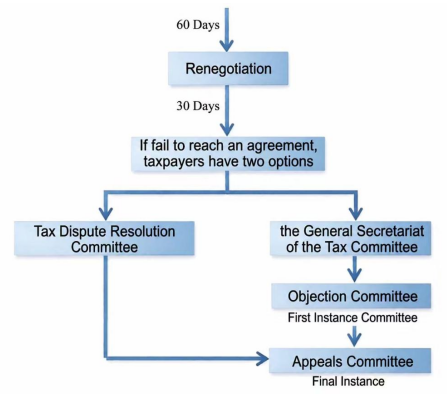
Figure 5: Specific Process for Applying for Reassessment of Tax Disputes in Saudi Arabia
Even if a tax dispute has formally entered statutory procedures such as administrative reconsideration or administrative litigation, this does not mean that dispute resolution can only rely on a rigid decision and fall into a deadlock of opposition. At this stage, the tax authorities should still adhere to the dispute handling concept that prioritizes flexible resolution and employ parallel negotiation and mediation. They should keep open channels for communication and consultation, and not forgo any opportunity for prior settlement or flexible dispute resolution. On the one hand, the tax authorities should take the initiative to maintain regular contact with taxpayers, patiently interpret tax policies, explain the legal basis for enforcement, and clarify factual uncertainties. They should fully listen to the reasonable demands and practical difficulties of all parties involved in a dispute and objectively address the core points of contention and the root causes of disagreement. On the other hand, tax authorities shall actively introduce key professional personnel, public lawyers, and third-party experts to conduct neutral mediation. For reconcilable matters such as deviations in policy understanding, differences in procedural interpretation, and disputes over the determination of tax-related facts, carry out multiple rounds of consultation, good-faith communication, and flexible mediation within the statutory framework, balancing reasonableness with compassion. At the same time, it is necessary to improve the dispute handling process. For disputes where consensus has been reached through communication and consultation and all differences have been resolved, the application for reconsideration and litigation can be withdrawn, terminating the dispute procedure in a flexible manner to reduce the consumption of administrative and judicial resources. For example, China's tax authorities have established a "tax and judicial dispute mediation mechanism" to actively introduce judicial power at different stages of administrative litigation. Before litigation, they guide parties involved in tax disputes to participate in mediation, assisting them in reaching agreements through voluntary negotiation to resolve the disputes. During litigation, the court does not treat a judgment as the only option for closing a case. After the trial, another round of mediation is conducted based on the specific circumstances, striving to settle the case through mediation where the relevant conditions are met. Following a lawsuit, the People's Procuratorate takes the lead, fully leveraging the supervisory function of the procuratorial department. It promotes the substantive resolution of tax disputes through measures such as interviews and hearings, urging the parties to voluntarily fulfill their tax obligations.
In the future, tax dispute resolution will establish a new framework of global collaboration, grounded in the rule of law, powered by digital intelligence, and centered on flexibility. This will achieve a shift from "firefighting after the fact" to "advance warning, in-process guidance, and intelligent governance throughout the entire process." The rule of law is an important support for the long-term resolution of tax disputes. The global tax rule system will continue to be improved, addressing institutional gaps in emerging areas such as the platform economy, digital services, cross-border e-commerce, and asset restructuring. It will refine the discretionary standards for tax enforcement and promote greater consistency in the interpretation of policies, the rules defining tax-related matters, and the handling of similar cases. Digital intelligence will become the core engine for reshaping the governance model of tax disputes. By leveraging multi-dimensional tax-related data resources, a comprehensive and precise intelligent risk early warning system can be established. This allows for immediate detection of potential issues, ensuring they are truly identified in their infancy and resolved at the earliest stage. The concept of flexible management will become increasingly widespread and deeply integrated into practice. Tax dispute resolution no longer relies solely on rigid law enforcement and adversarial approaches. Instead, it places greater emphasis on equality, respect, consultation, co-governance, convenience, and relief, aiming to build a diversified dispute resolution system led by tax authorities with multi-party participation. The global tax cooperation network will continue to be optimized, and collaborative mechanisms such as international tax information exchange, joint assessment of cross-border tax matters, and mutual agreement procedures will be further strengthened. Through bilateral consultations, multilateral dialogue, and professional coordination, we will effectively resolve cross-border tax disputes, reduce tax uncertainties for cross-border operations, and foster a fair and transparent tax environment for global cross-border investment and trade.